

ENT vs. Allergist
Which Specialist Should You See?
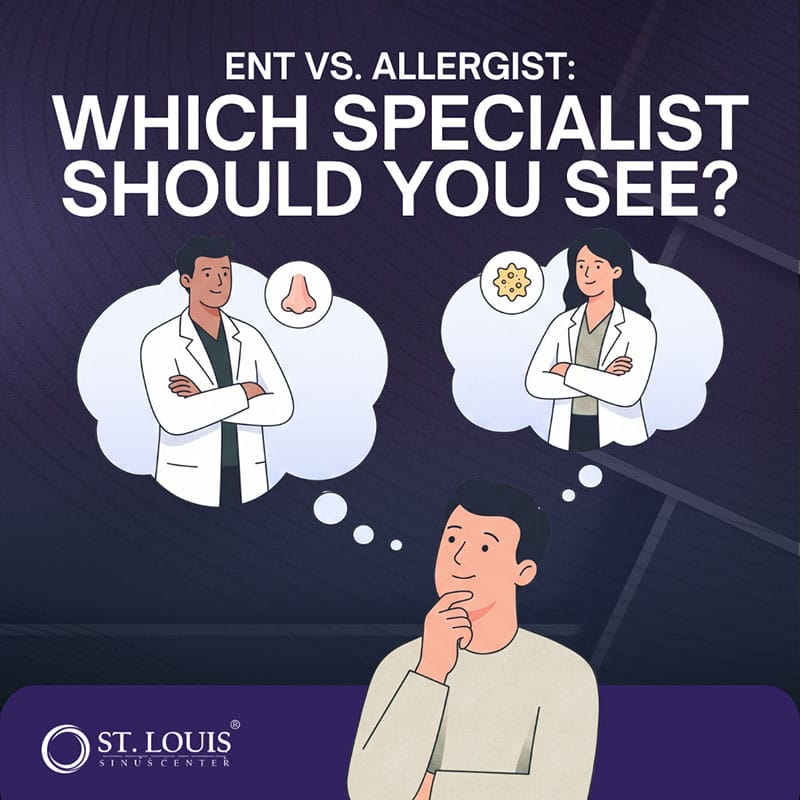
Persistent sinus issues such as nasal obstruction, frequent sneezing, breathing difficulties, postnasal drip, sinus pressure, and a persistent sore or scratchy throat can be frustrating, particularly if these symptoms start impacting your day-to-day activities, productivity, sleep, and comfort.
If you’ve been dealing with these issues for quite some time and have finally decided it’s time to seek professional medical help, you might be wondering which between an ENT and an allergist you should consult with first for your concerns.
This article from St. Louis Sinus Center can help patients in St. Louis, MO, understand the basics of an ENT and an allergist, the difference between the two specialists, and which one they should see based on their symptoms.
What Is an ENT?
An ENT, formally known as an otolaryngologist in most medical settings, is a healthcare specialist who diagnoses and treats conditions and diseases affecting the ears, nose, throat, neck, and related facial structures. They offer both nonsurgical and surgical treatment options based on each patient’s needs, clinical findings, symptoms, medical history, treatment goals, and other individual health factors.
Depending on their training, expertise, and clinical focus, they may also perform surgeries on the ears, nose, throat, mouth, head, and face, should it be necessary.
What does an ENT treat?
An ENT can treat a range of issues and conditions, including:
- Chronic sinusitis
- Persistent nasal obstruction
- Persistent runny nose
- Severe sinus pain and/or pressure
- Hearing loss
- Recurring or frequent ear infections
- Tonsillitis
- Persistent sore or scratchy throat
- Chronic cough
- Difficulty swallowing
- Wheezing or voice hoarseness
- Balance issues, such as dizziness or vertigo
- Sleep-related breathing disorders, such as severe snoring or sleep apnea
- Structural issues or abnormalities in the nose and sinuses, such as nasal polyps or a deviated septum
- Lumps in the neck or face
What Is an Allergist?
An allergist is a healthcare specialist who diagnoses, treats, and manages allergic conditions, asthma, and other issues that affect the immune system.
An allergist may perform allergy testing to help assess symptoms and determine potential allergy triggers. Based on the patient’s clinical findings and unique allergy profile, they may recommend treatment options that may include medications, immunotherapy, and lifestyle modifications to support allergy symptom management.
What does an allergist treat?
An allergist can treat and manage a range of immune-related conditions, such as:
- Allergic rhinitis (hay fever)
- Allergic conjunctivitis
- Asthma
- Food allergies
- Drug allergies
- Latex allergies
- Eczema
- Anaphylaxis
ENT vs. Allergist: Which Specialist Should I See for My Sinus Problems in St.Louis, MO
Which specialist between an ENT and an allergist you should see will depend on your symptoms, their severity, and your medical history.
⭕ Schedule a consultation with an ENT if you are experiencing:
- Chronic sinusitis
- Persistent nasal congestion and breathing difficulties
- Hearing loss
- Recurring ear infections
- Throat issues
- Structural issues or abnormalities in the nose or sinuses
- Underlying problems with the ears, nose, throat, voice, or balance
⭕ Schedule a consultation with an allergist if you are experiencing:
- Itchy eyes, nose, and throat
- Frequent and uncontrollable sneezing
- Runny nose with thin, clear, and watery nasal discharge
- Symptoms triggered by suspected allergens such as pollen, dust mites, mold, or pet dander
- Allergy-related asthma
ENT and Allergist: Will I Need to See Both Specialists?
Some sinus issues may be more complex because they may involve both structural issues and allergic conditions. In these cases, you may need to consult with both an ENT and an allergist.
Consider seeing both an ENT and an allergist for joint specialty care for:
- Repeated sinus infections that may be linked to chronic inflammation of the sinuses, poor sinus drainage, and structural issues in the nose or sinuses
- Allergies associated with chronic nasal congestion, postnasal drip, sinus pain and pressure, and sinus inflammation
- Sleep-related breathing concerns that may occur alongside allergic or structural nasal issues
Commonly Asked Questions About ENT and Allergy Care in St. Louis, MO
What is the difference between allergies and sinusitis?
Allergies occur when the immune system reacts to substances known as allergens that are typically harmless to most people. Common allergens that can cause allergic reactions include pollen, dust mites, mold spores, and pet dander. Common symptoms may include frequent sneezing, postnasal drip, a runny nose, itchy and watery eyes, and skin rashes or hives.
Sinusitis is the irritation, swelling, and inflammation of the tissues and membranes lining the sinuses. The sinuses are hollow, air-filled spaces located behind the nose, cheeks, and forehead. Sometimes, the sinuses can become irritated and swollen, trapping mucus. Common sinusitis symptoms include mucus buildup, nasal congestion, sinus pressure, and thick nasal discharge.
Should I see an allergist or an ENT for my sinus problems?
Consider an ENT evaluation for persistent or recurrent sinonasal symptoms, particularly when chronic sinus disease or structural concerns may be involved. An allergist may be appropriate when symptoms suggest an allergic trigger or specialized allergy testing and management may be beneficial.
When is it time to see a sinus specialist in St. Louis, MO?
While some sinus issues may resolve with adequate rest, proper hydration, and appropriate medications and home remedies, consider seeing a sinus specialist in St. Louis, MO, if you are experiencing persistent, recurring, or worsening symptoms.
Moreover, seek prompt medical help if you are experiencing severe symptoms such as high fever, facial swelling, vision changes, confusion, or anaphylaxis.
Should I see both an allergist and ENT?
Some complex sinus issues, particularly if both allergic reactions and structural issues are both suspected to be present, may need joint specialty care from both an allergist and an ENT.
Can ENTs treat allergies?
Many ENTs provide holistic ENT care, which may include allergy care and management. However, allergists have specialized training in allergy diagnosis, treatment, and management.
Does insurance cover ENT and allergist visits?
Insurance compatibility, coverage, and out-of-pocket costs will vary depending on your insurance plan and insurance provider. Our office can help check and confirm insurance details before your appointment.
Looking for an ENT Clinic Near Me in St. Louis, MO
St. Louis Sinus Center provides ENT services including allergy testing, sinus evaluations, and treatment planning and guidance for patients in St. Louis and the surrounding Missouri communities. If you are experiencing persistent sinus issues, get in touch with our team to discuss potential underlying causes and recommended treatment options.