

Ringing in the Ears: When to See an ENT Specialist for Tinnitus
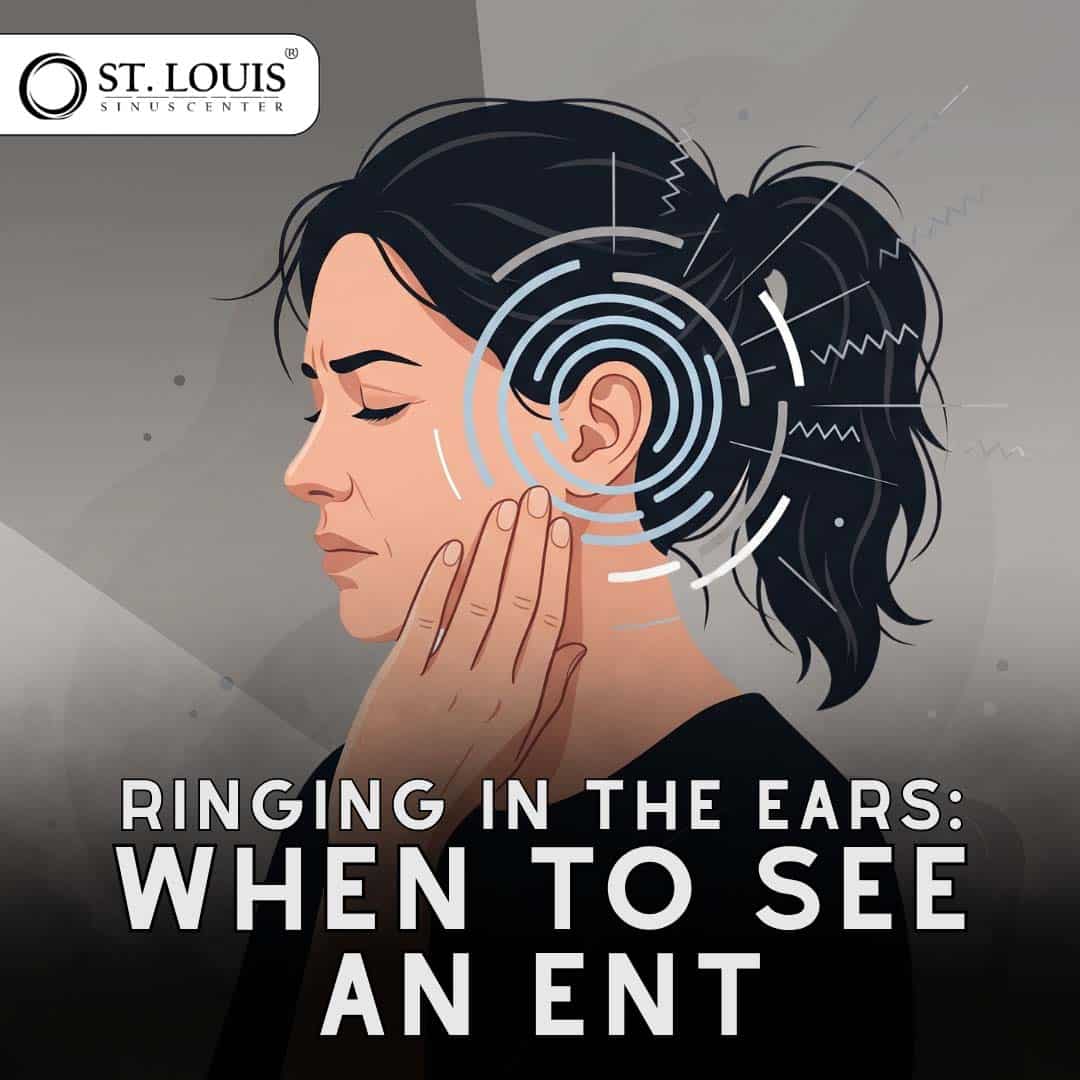
Most people do not make an appointment the first time they notice ringing in the ears. They wait to see if it fades. They assume it came from a loud restaurant, a stressful week, poor sleep, or a busy day. Sometimes it does go away. But when the sound keeps returning, lasts longer than expected, or starts showing up with other symptoms, it may be time to stop guessing. Tinnitus is a symptom rather than a diagnosis on its own, and it can be linked to hearing loss, noise exposure, earwax, medication effects, and inner-ear conditions.
At St. Louis Sinus Center, we think one of the most useful questions is not just, “Why am I hearing this?” It is, “What else is happening with it?” That is often what helps separate a mild, short-lived symptom from one that deserves a closer evaluation.
It may not sound like “ringing”
Even though people often call it ringing in the ears, tinnitus can sound very different from one person to another. Some people describe buzzing, humming, hissing, clicking, roaring, or a pulse-like sound. It may affect one ear or both. It may come and go, or it may be there much of the time. Those details matter because the pattern can offer clues about what may need to be evaluated.
When it may be reasonable to watch and wait
A brief episode after a loud concert, a sporting event, or another noisy setting may settle down on its own. A one-time sound that fades and never comes back does not always point to a larger issue. But once the sound lingers, becomes more noticeable, or starts returning often, the situation changes. At that point, it may be appropriate to consider evaluating the full pattern rather than assume it will always pass.
When tinnitus deserves more attention
One of the clearest reasons to see an ENT is recurrence. If the sound fades and then returns again and again, that pattern may be clinically relevant. Even mild tinnitus becomes more important once it stops feeling random and starts feeling familiar. Ongoing or bothersome tinnitus is one of the common reasons hearing testing is recommended.
Duration matters too. If ringing in the ears stays around instead of fading, it is reasonable to have it evaluated. Guidance commonly treats chronic tinnitus as tinnitus lasting three months or longer, but patients do not need to wait that long before bringing it up, especially if the symptom is disruptive or changing.
It is also worth taking more seriously when tinnitus starts affecting sleep, concentration, reading, work, or quiet time. The symptom does not have to be painful to interfere with daily life. About one in five people with tinnitus have bothersome tinnitus that affects daily function or well-being.
Hearing changes make the picture different
Tinnitus often happens along with hearing loss. If voices seem less clear, one ear feels different from the other, or everyday sounds seem more muffled than they used to, that changes the picture. A targeted tinnitus workup often includes hearing testing because hearing loss and tinnitus commonly overlap.
One-sided symptoms deserve special attention. If the ringing is clearly stronger in one ear, or if one ear seems to hear differently than the other, that is a detail worth bringing in. It does not automatically mean something severe is happening, but unilateral tinnitus is one of the patterns that may call for a closer look and, in some cases, more testing.
Dizziness, fullness, and pressure matter too
Tinnitus becomes more important to evaluate when it shows up with dizziness, balance trouble, or a feeling of fullness in the ear. Those symptoms together can point to an inner-ear issue rather than isolated ringing. One well-known example is Ménière’s disease, which can involve tinnitus, hearing loss, vertigo, and fullness or congestion in the ear.
That symptom cluster matters because patients do not always connect it at first. Someone may focus on the ringing and overlook the fact that they also feel off balance, unsteady, or “full” on one side. When ear symptoms travel together, they often deserve more than reassurance alone.
A pulse-like sound is different
Not all tinnitus is the same. If the sound seems rhythmic or matches your heartbeat, that is often called pulsatile tinnitus. This pattern should be evaluated because it can be associated with blood-flow issues or other less common causes. It does not automatically mean something dangerous is happening, but it is not the kind of symptom to leave unexplained.
Sudden changes should not be ignored
A sudden change is worth taking seriously. If ringing in the ears begins all at once, especially with a noticeable drop in hearing, prompt evaluation matters. Sudden hearing loss can be mistaken for congestion, allergies, or wax, but it is treated as a faster-moving concern than mild background tinnitus that has stayed unchanged for years.
What an ENT evaluation may include
When tinnitus is evaluated, the goal is not just to confirm that a sound is present. The goal is to understand the full symptom picture. That may include when it started, whether it is constant or intermittent, whether it affects one ear or both, whether there has been recent noise exposure, and whether hearing loss, dizziness, fullness, pain, or medication changes are part of the problem. A physical exam and hearing test are often part of that process.
In some cases, the explanation may be fairly direct, such as earwax or hearing loss. In others, the purpose of the visit is to identify whether the pattern suggests an inner-ear condition, a pressure-related problem, or another issue that needs more follow-up. Imaging is not part of every tinnitus workup, but it may be considered when tinnitus is one-sided, pulsatile, tied to uneven hearing loss, or paired with neurologic findings.
When ringing in the ears deserves a closer look
If the sound keeps coming back, lasts longer than expected, starts affecting sleep or concentration, or shows up with hearing changes, dizziness, or ear fullness, it may be time to have it evaluated. Those patterns often tell you more than the sound itself.
Are you noticing ringing, buzzing, humming, or pulsing in your ears that feels harder to ignore? We can review your symptoms and discuss what evaluation and treatment options may fit your needs.