

Allergy Season in St. Louis
What ENT Specialists Want You to Know
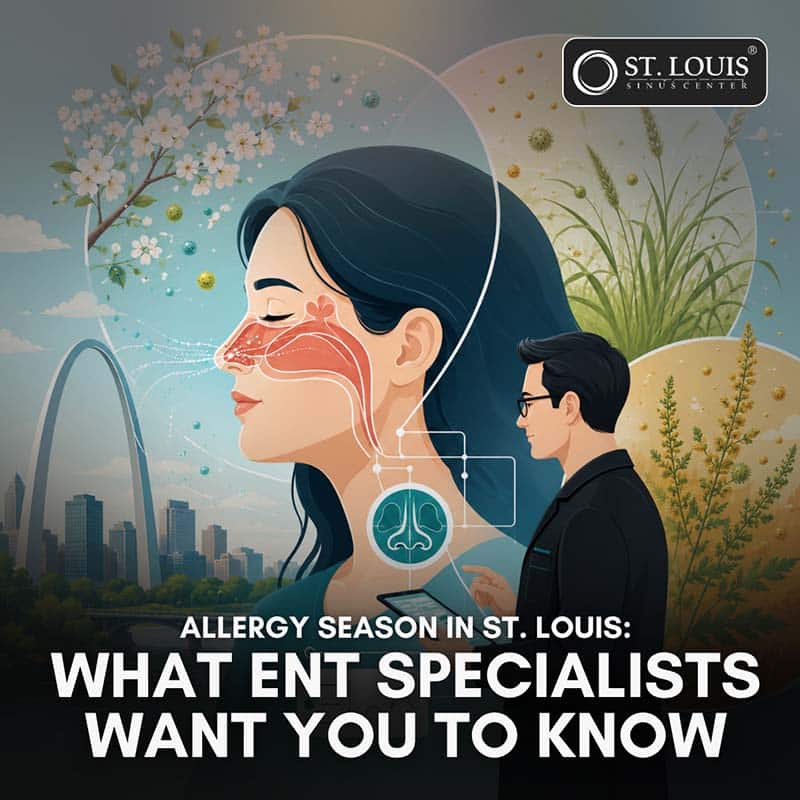
For many people in St. Louis, the arrival of spring isn’t marked by blooming trees or warmer temperatures—it’s the return of constant sneezing, congestion, and watery eyes. Others notice their symptoms linger well into summer or even fall, making it feel like allergy season never really ends. At St. Louis Sinus Center, patients are often surprised to learn that allergies don’t always follow a single season, especially in a region where pollen counts can remain elevated for much of the year.
Understanding what’s triggering your symptoms is the first step toward finding relief and preventing allergies from disrupting your everyday life.
Why Allergy Season Feels Longer in St. Louis
St. Louis experiences several overlapping allergy seasons throughout the year.
Tree pollen often appears in late winter and spring, grasses become more active as temperatures rise, and weeds such as ragweed can continue causing symptoms well into the fall. Changes in humidity and windy conditions can also spread pollen and other airborne allergens throughout the region.
Because these allergens overlap, some people experience symptoms for months rather than just a few weeks.
Allergies Can Affect More Than Your Nose
Sneezing and itchy eyes are well-known signs of seasonal allergies, but they’re far from the only symptoms. Many patients also experience:
- Persistent nasal congestion
- Postnasal drip
- Facial pressure
- Frequent throat clearing
- Ear fullness or popping
- Reduced sense of smell
- Sinus headaches
- Fatigue caused by poor-quality sleep
These symptoms can make it harder to focus at work, enjoy time outdoors, exercise, or simply get a restful night’s sleep.
Because allergies and chronic sinus conditions often share similar symptoms, it’s not always easy to tell the difference without an evaluation.
Why Allergies Sometimes Lead to Sinus Problems
When allergens enter the nose, your immune system responds by releasing chemicals that trigger inflammation. Over time, repeated exposure can keep the nasal passages swollen, making it more difficult for mucus to drain normally.
As drainage slows, pressure may build inside the sinuses, increasing the likelihood of congestion, facial discomfort, and recurring sinus infections for some individuals.
That’s one reason why symptoms that seem like “just allergies” may eventually begin affecting your sinuses as well.
How ENT Specialists Help Identify the Cause
Seasonal allergies don’t affect everyone the same way.
At St. Louis Sinus Center, an ENT evaluation focuses on understanding the full picture rather than simply treating symptoms. Your provider may review your medical history, discuss when your symptoms occur, examine your nasal passages, and determine whether allergy testing may help identify specific triggers.
Identifying potential allergy triggers can help guide treatment decisions and provide a better understanding of why symptoms may continue to return year after year.
How Do I Know It’s Time to Stop Waiting and Get Checked?
It’s common to assume allergy symptoms will disappear once the season changes. However, recurring or persistent symptoms shouldn’t become something you simply learn to live with.
An evaluation from the right ENT may be appropriate if:
- Symptoms continue for several weeks.
- Allergies return around the same time every year.
- Nasal congestion regularly interferes with sleep.
- You experience recurring sinus infections.
- Facial pressure or headaches become more frequent.
- Symptoms make it difficult to enjoy work, school, exercise, or outdoor activities.
Getting evaluated doesn’t necessarily mean you’ll need a procedure. Often, it’s simply the next step toward better understanding the factors that may be contributing to your symptoms and discussing appropriate care options.
Practical Ways to Reduce Allergen Exposure
While you can’t eliminate pollen completely, a few everyday habits may help reduce your exposure during allergy season:
- Keep windows closed when pollen counts are high.
- Shower and change clothes after spending time outdoors.
- Wash bedding regularly to remove pollen that collects on fabrics.
- Replace home air filters as recommended.
- Limit outdoor activities during particularly windy days if your symptoms tend to flare up.
These simple changes won’t eliminate allergies, but they may reduce the amount of pollen you’re exposed to each day.
Don’t Let Allergy Season Keep You Indoors
Seasonal allergies shouldn’t prevent you from enjoying everything St. Louis has to offer, from spending time in Forest Park to attending outdoor festivals or simply enjoying a walk around your neighborhood. If congestion, sinus pressure, or allergy symptoms continue to interfere with your daily routine, it may be time to find out what’s behind them.
At St. Louis Sinus Center, we help patients throughout St. Louis and the surrounding communities better understand the factors that may be contributing to their allergy and sinus symptoms through personalized evaluations and thoughtful care.
If you’re ready to learn how we can help you find answers to your allergy concerns, give us a call to schedule a consultation.